LA Times: Essential California
- 2.9
- Rating
- 500.00K
- Installs
- Free
- Price

 Analysis by App-foxy
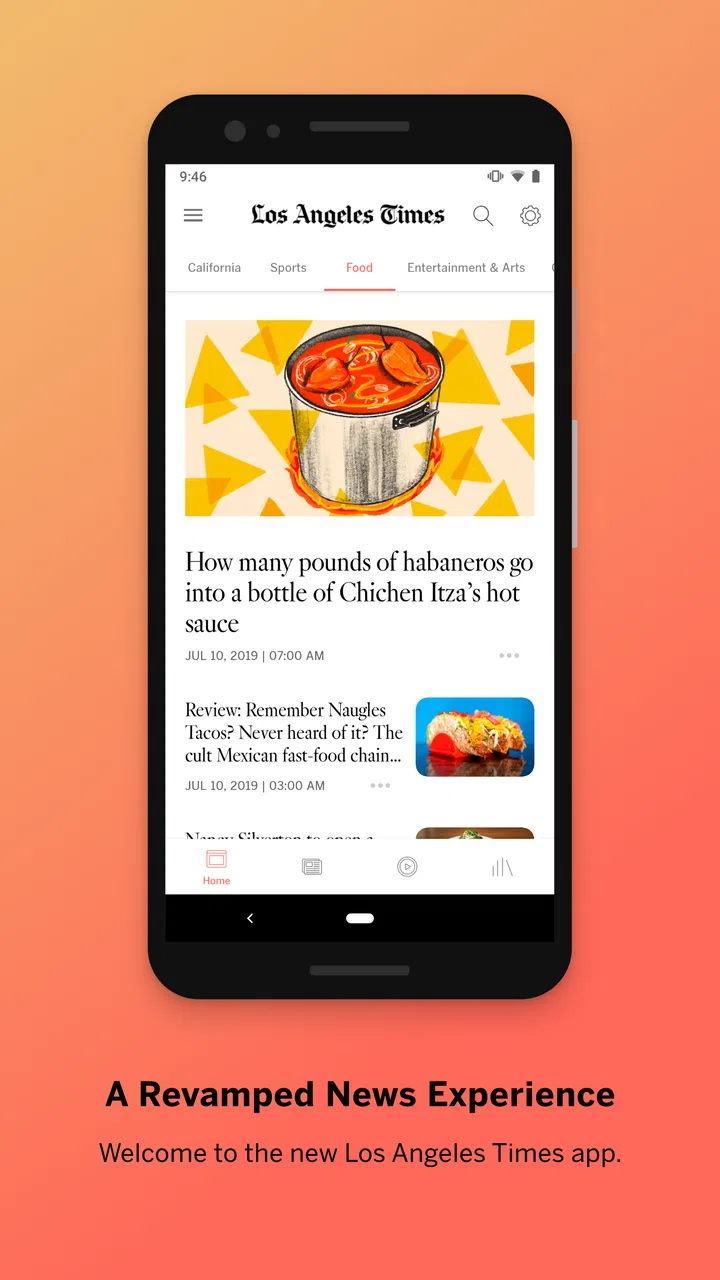
I found LA Times: Essential California most useful when I treated it as a shared news source rather than just another headline feed. It is a free News & Magazines app from NantMedia Holdings, LLC, built around access to reporting, photographs, and videos from the Los Angeles Times. On a household device, that makes it a practical way for one person to catch up on California news in the morning while another checks a different story later in the day.
My experience was mixed in a useful way. The app gives the LA Times a direct place on a phone or tablet, which feels more focused than opening a general news aggregator. At the same time, its average rating of 3.1 from around 3.7 thousand ratings suggests that the experience will not satisfy everyone equally. I would recommend trying it if you specifically value LA Times journalism, but I would not install it expecting a completely frictionless replacement for every other news source.
How it works on a shared household device
The clearest everyday use case is a family tablet or a phone that moves between people. Imagine one household member checking local developments with breakfast, another watching a video during a commute, and someone else opening a photo gallery in the evening. Because the app brings several media types together, it can support different reading habits without requiring everyone to use the same format.
You May Also Like

 Blood Strike: 2.5 Anniversary
Blood Strike’s Loadouts Turn Every Drop Into a Tactical Gamble
A close look at Blood Strike’s custom loadouts: how fast access to signature weapons reshapes its battle royale rhythm, rewards preparation, and narrows the gap between fights.

 Pandora - Music & Podcasts
Pandora’s Music Is Easy to Start, but Harder to Recover
Pandora’s strength is its low-effort path from a seed to a station. Its weak spot is how much confidence it asks you to place in connection, setup, and quiet recovery.

 8 Ball Pool
 Is Built on Rivalries, Rematches, and Routine
A close look at the rivalries, rematches, shared routines, and unanswered safety questions that turn a quick pool match into a persistent mobile community.

 Samsung Music
’s Quiet Strength Is Playing What You Already Own
Its reach comes less from spectacle than from dependable access to a personal library. That simplicity is both the app’s strongest retention engine and its ceiling.

 AccuWeather: Weather Radar
AccuWeather Review: A Quick, Clear Forecast for Everyday Decisions
For everyday plans, the best forecast is the one you can understand quickly. AccuWeather makes rain timing, radar, and local conditions easy to act on, with a few trade-offs.

 Hill Climb Racing
Why Hill Climb Racing Still Turns Crashes Into One More Run
A tiny car, a bumpy hill and one more upgrade: Hill Climb Racing keeps resurfacing because its simple chaos makes every near-miss feel personal.
More From Our News Desk



I also like the idea of using it as a deliberate news stop instead of leaving a general-purpose feed running in the background. A broad aggregator mixes publishers, subjects, and priorities. This app gives the household a more recognizable editorial destination: LA Times coverage, with California at the center of the experience. That focus is valuable when local context matters more than receiving the largest possible stream of headlines.
The trade-off is variety. If your household wants international coverage from many publishers, specialist technology reporting, sports from several regions, or highly personalized topic feeds, a general news app may be more flexible. The LA Times app makes more sense when its reporting is the reason you are opening it, not merely because you want any news application.
Different reading habits can coexist
One person may prefer short visits, scanning headlines and opening only one or two articles. Another may spend longer with visual coverage or video. I found that the app’s combination of written reporting, photography, and video makes this kind of shared use more natural than an application focused on text alone. It does not force the whole household into one pace.
A useful routine is to decide who uses the app for what. I would use it for local awareness, major California developments, and stories where the LA Times perspective is especially relevant. I would use a broader service alongside it for subjects outside that editorial focus. This simple division prevents disappointment and keeps the app from being judged against a product designed for a completely different job.
There is also a practical benefit to having a dedicated publication app on a common device: the source is visible before anyone starts browsing. That can make conversations about a story easier because family members are more likely to be looking at the same publication, rather than comparing unrelated summaries from different feeds.
Setting expectations before anyone shares access
The app is free to install, which removes the biggest barrier to testing it on a household device. However, in-app purchases range from $0.99 to $19.98 per item, so I would not assume that every part of the experience is covered simply because the download costs nothing. Before handing the device to children or guests, I would review the account used for purchases and make sure the household understands who is responsible for any transaction.
This is especially important on a shared tablet. A person may think they are only opening a news story, while another household member has already connected an account or payment method. I would keep the app associated with the intended adult account and avoid treating the device as a completely open space for purchases. That is not a criticism unique to this application; it is simply sensible housekeeping when a free app includes optional paid items.
The current version is 5.0.98, and the app requires Android 8.0 or later. That makes compatibility an easy first check before planning to use it on an older spare phone. If the household has a mixture of newer and older devices, I would test the actual device that will be shared rather than assuming that an app working on one phone will behave the same way everywhere.
For setup, I would begin with a short trial rather than immediately making it the household’s only news source. Open it at different times of day, compare the reading experience on a phone and a larger screen, and see whether the available mix of articles, photos, and videos suits everyone. This is a more reliable test than judging it from the short description alone.
Account boundaries matter more than convenience
A shared device can blur personal reading habits. If one person opens stories for work, another reads entertainment coverage, and a third watches videos, the app may become a collective space rather than a private one. I would decide in advance whether that is acceptable. If personal separation matters, individual devices or clearly separated user profiles are a better approach than expecting the app itself to create boundaries that the household has not established.
I would also avoid promising children that the app is a fully managed family environment. Its content rating is Everyone 10+, so it may be suitable for many older children with ordinary supervision, but that label should not replace a parent’s judgment about current events, difficult subjects, advertising, or links encountered through news content. A child who can read independently may still need help understanding a serious story.
Coordinating news without turning it into a chore
The best household workflow I found is lightweight: one person notices a useful story, mentions it at dinner or in a family chat, and the next person opens the app when convenient. This works better than expecting everyone to read the same article at the same time. The app becomes a shared reference point, not another obligation.
For a family that follows local events closely, I would use the app as the first stop and then compare particularly important stories with another reputable source. That habit has two advantages. It keeps the LA Times perspective central while reducing the risk of relying on a single publication for every subject. It also helps younger readers learn that news is something to evaluate, not just consume.
Photos and videos can make coordination easier because they give people another entry point. Someone who does not want to read a long article may still understand the basic context through visual coverage, while a more interested reader can continue into the written reporting. I see this as one of the app’s more useful household qualities, although people who prefer a quiet, text-only reading experience may find the mixed format less focused.
Another tip is to avoid using the app as a constant alert substitute. I prefer opening it at chosen moments instead of letting news interrupt every activity. That approach is particularly helpful on a shared device, where one person’s preferred pace can otherwise affect everybody. A morning check and an evening catch-up are often enough for casual users; heavier readers can return more often without making the whole household follow the same schedule.
Age, trust, and the value of editorial focus
The Everyone 10+ rating gives parents a useful starting point, but I would still introduce the app according to the child’s maturity and the type of stories appearing that day. News is unpredictable. A local report may be calm and practical in the morning and emotionally difficult later. I would be comfortable letting an older child browse with guidance, but I would not treat the age label as a guarantee that every article will feel appropriate for every family.
Trust is also about knowing what kind of source you are choosing. This is not a neutral collection of every publication’s reporting. It is a direct route to the LA Times, developed by NantMedia Holdings, LLC. That editorial identity is the main reason to use it. I appreciate the consistency, but I would pair it with other sources when a decision depends on a wider range of viewpoints or specialized expertise.
The app’s audience size gives it some practical reassurance: it has passed 500 thousand installs, while its review count is around 1.4 thousand. I read those figures as evidence that it is an established option rather than an obscure experiment, not as proof that every household will enjoy it. The rating is more revealing for expectations: the experience has clear appeal, but also enough dissatisfaction that I would keep the first week exploratory.
For older relatives, the app may be a convenient way to stay connected with California coverage without navigating a crowded news portal. For younger readers, it can support conversations about how reporting, images, and video present the same event differently. In both cases, the household should talk about account responsibility and respectful discussion, because the app supplies content but does not replace family judgment.
Where it beats the usual alternatives
Compared with a general news aggregator, this app offers a stronger sense of publication identity. I know why I am opening it: I want the LA Times view and its California-oriented reporting. That makes it easier to build a routine around one trusted source and to share stories with people who recognize the same editorial context.
Compared with reading the publication through a mobile browser, a dedicated app can feel more direct. I do not have to begin with a search or sort through unrelated tabs. The combination of articles, photos, and videos is also better suited to quick switching between formats. For a household device, that straightforward entry point is a real advantage.
Still, the browser can be preferable for someone who wants to keep storage and app clutter low, or who regularly switches among many publications. A general aggregator remains better for breadth and cross-source comparison. I would choose this app when publication-specific access matters more than maximum customization.
There is a further trade-off around shared use. A dedicated app is easier to recognize and open, but it can also become the default source simply because it is convenient. I would counter that by deliberately checking another source for major or disputed subjects. Convenience should shape the routine, not determine the household’s entire understanding of the news.
Who should install it, and who should pass
I think it is a good fit for California residents, people who follow Los Angeles closely, and readers who want reporting, photography, and video in one publication-focused place. It is also suitable for households that want a common news app on a tablet and are willing to discuss account boundaries before sharing it.
I would be more cautious if your main goal is a personalized worldwide briefing, a specialist news feed, or a completely free experience with no purchase decisions to manage. The app’s free entry is helpful, but the presence of in-app purchases means adults should remain aware of the account environment. I would also skip it if nobody in the household has a particular interest in LA Times coverage; a broader news service may then offer better value in daily use.
People who dislike mixed media may prefer a simpler reading tool. Likewise, readers who want every story ranked by their own topics may find the publication-centered approach less adaptable. Those are not flaws in the same sense as a crash or missing function; they are signs that the app has a defined editorial purpose.
My household verdict
After using it as a shared news destination, I see LA Times: Essential California as a focused companion rather than a universal news replacement. Its free installation, established presence, and mix of reporting, photos, and videos make it easy to introduce to a household. The strongest experience comes when everyone understands that the app represents one publication and uses it intentionally.
I would install it on a shared Android device if the household follows California news and can keep purchases tied to the right adult account. I would explain the Everyone 10+ rating to younger users, encourage questions about difficult stories, and use another source when broader comparison matters. That combination respects both the app’s strengths and its boundaries.
My final recommendation is measured but positive: try it if LA Times journalism is already relevant to your family. Give it a few reading sessions on the device people will actually share, not just a quick glance on one phone. If the editorial focus feels useful, it can become a dependable part of the household routine. If you need maximum breadth, deep personalization, or a single app covering every kind of news, a general alternative will probably serve you better.
FAQs for LA Times: Essential California
01What is the LA Times: Essential California app?
The LA Times: Essential California app is a comprehensive platform offering the latest news and insights from across California. It provides users with access to top stories, local news, and in-depth analyses on various topics. The app is designed for those who want to stay informed about California's current events and developments.
02Is the LA Times: Essential California app free to use?
While the app is free to download on both Android and iOS devices, access to some articles and features may require a subscription. Users can explore a variety of free content, but subscribing offers full access to all articles and exclusive features, ensuring a complete reading experience.
03Does the LA Times: Essential California app offer personalized content?
Yes, the app allows users to personalize their news feed according to their interests. By selecting preferred topics and regions, users can receive tailored news updates and notifications. This feature ensures that you are always informed about the issues that matter most to you, enhancing the overall user experience.
04How frequently is the content updated in the LA Times: Essential California app?
Content on the LA Times: Essential California app is updated continuously throughout the day. The app provides real-time news updates, ensuring that users have access to the latest information as it happens. This frequent updating keeps the app a reliable source for breaking news and current events.
05Can I access offline content on the LA Times: Essential California app?
Yes, the app offers the ability to save articles for offline reading. Users can download stories to read when they are not connected to the internet, making it convenient for those who want to catch up on news during travel or in areas with limited connectivity. This feature enhances usability and accessibility.
Pros
- Comprehensive California news coverage.
- User-friendly interface and navigation.
- Offline reading mode available.
- Customizable news alerts.
- High-quality journalism and reporting.
Cons
- Limited international news coverage.
- Subscription required for full access.
- Occasional app performance lags.
- Ads can be intrusive at times.
- Requires stable internet for updates.

LA Times: Essential California
Gallery